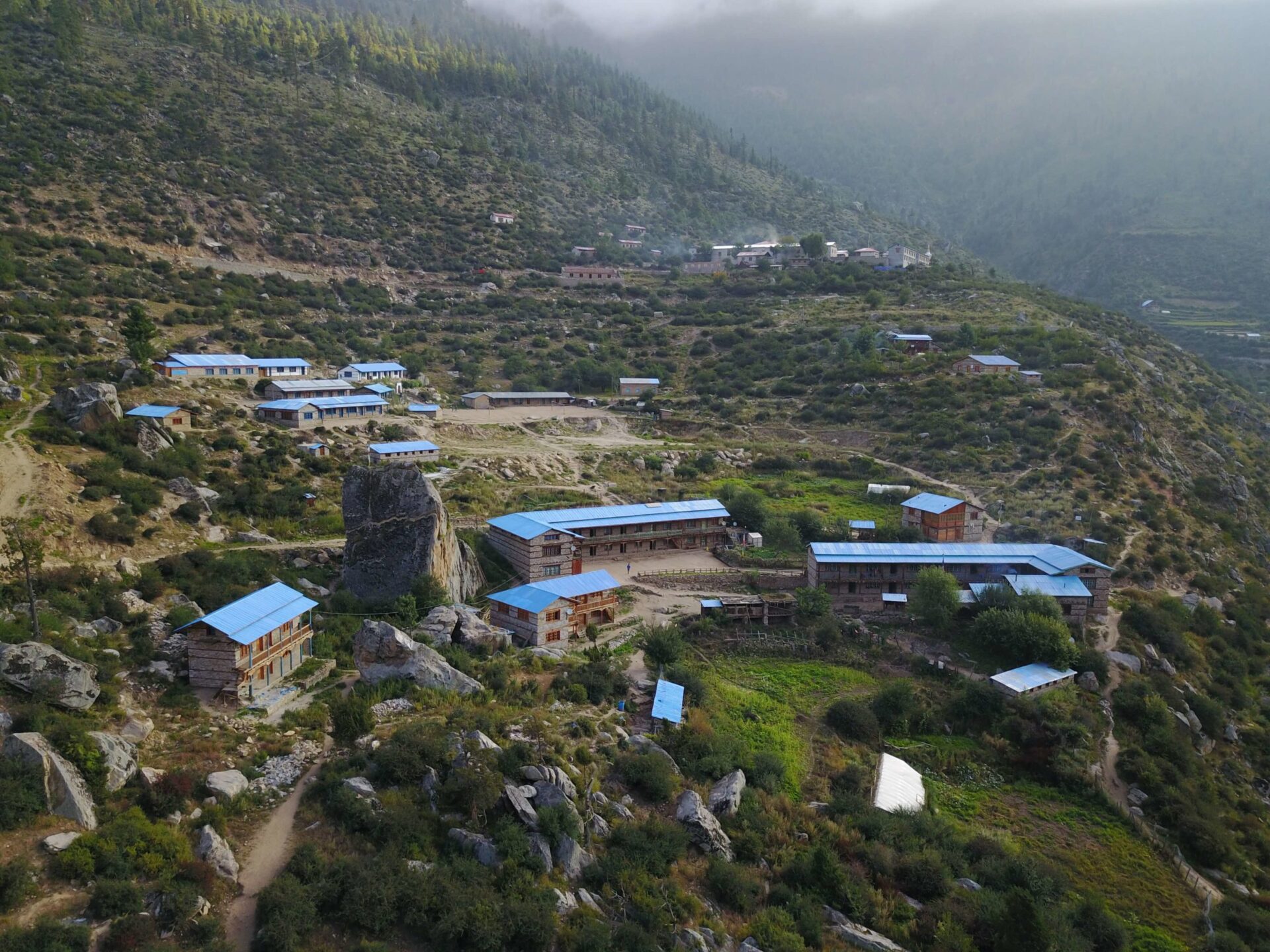
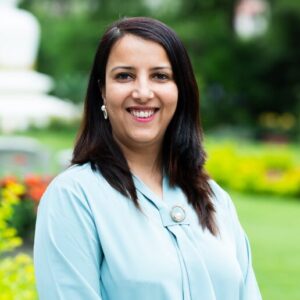
Awantika is Adara’s Head of Health Programmes for Remote Community Development in Nepal. In this role, she leads Adara’s health programmes to improve access to quality healthcare and health outcomes in Adara’s partner communities in remote Humla and Ghyangfedi, Nepal.
Awantika brings more than a decade of expertise in public health programming, systems strengthening, maternal and child health, nutrition, health governance, and capacity building in Nepal’s most underserved areas.
Throughout her career, Awantika has designed and led community-based health interventions that improve the health and wellbeing of women and children, particularly in hard-to-reach areas. She has worked extensively with local governments, health workers, and national stakeholders to enhance access to essential health services, strengthen primary healthcare systems, and promote equity in health planning and delivery.
Before joining Adara, Awantika held senior technical positions with several USAID-funded programs including the Clean Air Activity, Global Health Supply Chain Program, Strengthening Systems for Better Health, Health for Life, and Suaahara. She has led integrated MNCH and nutrition programming, supported the rollout of national electronic systems like DHIS2 and eLMIS, and helped develop national training packages and operational guidelines. Her work has reached thousands of health professionals and supported the inclusion of clean air and MNCH priorities into municipal planning processes.
Awantika holds a Master of Public Health from BRAC University, Bangladesh, under a WHO-TDR scholarship, and a Master of Arts in Child Development and Gender Socialization from Tribhuvan University, Nepal. She also has extensive experience in health systems research and has served as principal investigator on several national studies related to newborn care, supply chain practices, and health workforce capacity.
With her strong roots in Nepal’s remote areas and a commitment to community-centered development, Awantika is passionate about ensuring equitable health access for every woman and child, no matter where they live.