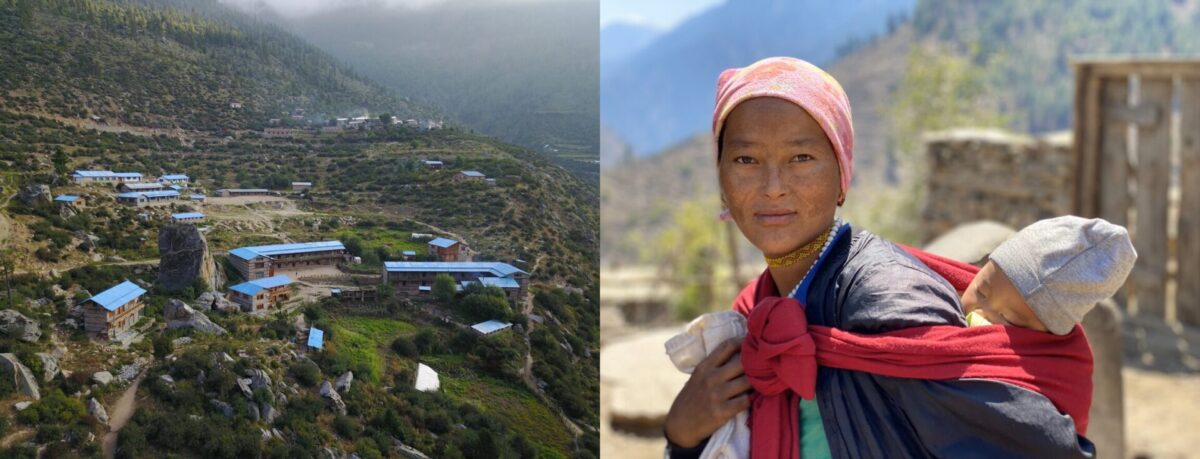
Adara’s research paper on safe motherhood in remote Humla, Nepal has been published in the peer-reviewed journal Critical Public Health. This is a significant contribution to the global evidence base on maternal and newborn health in remote and low‑resource settings.
Grounded in community‑based research, the paper offers practical insights for practitioners, policymakers and organisations working to strengthen maternal and newborn health systems in remote and low‑resource settings and highlights the importance of community‑led, culturally informed approaches alongside health system strengthening.
Understanding maternal health in one of Nepal’s most remote regions
The Humla district is one of Nepal’s most geographically isolated and challenging regions, with high‑altitude villages, limited road access and significant barriers to healthcare. Drawing on research conducted across six remote villages, the study explores how women navigate pregnancy and childbirth in this complex context.
Using a mixed‑methods, community‑led approach, the research examines how access to antenatal care (ANC) and birthing services is influenced not only by distance and health infrastructure, but also by social norms, family dynamics and long‑standing cultural beliefs around pregnancy and childbirth.
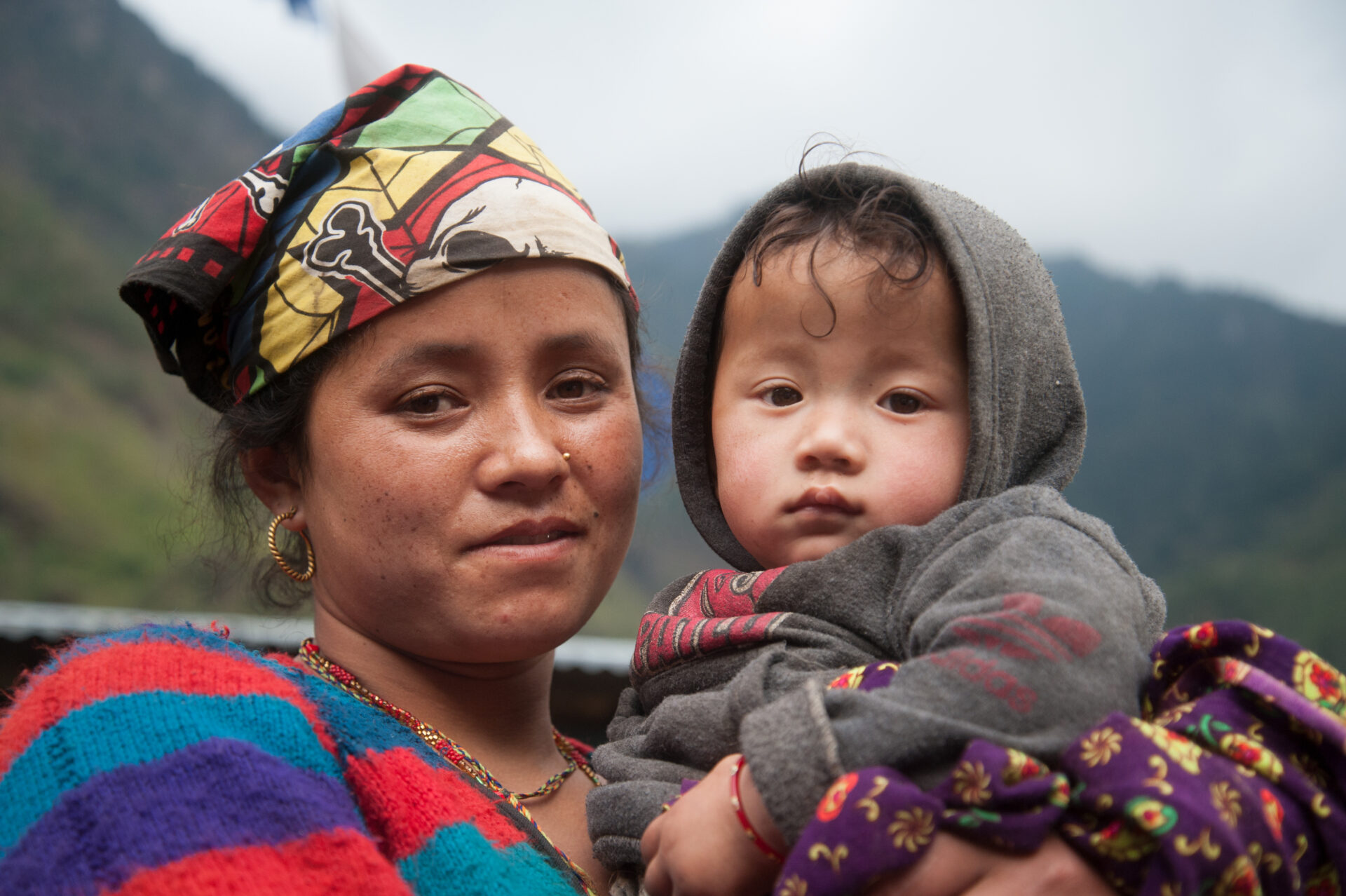
Comparing outcomes with and without local support
The study compares maternal health practices in villages supported by Adara’s maternal health programming with those without support, alongside provincial and national data. It focuses on three internationally recognised indicators of safe motherhood:
- Access to antenatal care (ANC)
- Completion of four or more ANC visits during pregnancy
- Place of delivery
The findings show that locally embedded, low‑cost interventions can significantly improve access to antenatal care, even in extremely remote settings.
Women in Adara‑supported villages were far more likely to attend antenatal, complete the recommended number of visits, and engage with formal health services – demonstrating the impact of community‑led, culturally informed approaches alongside health system strengthening.
Beyond access
One of the paper’s key insights is the reminder that maternal health behaviours in rural Nepal are shaped by a complex interplay of factors. It highlights that women often navigate between formal health services and traditional practices, rather than simply lacking access. It’s a reminder that improving maternal and newborn outcomes isn’t just about services being available, but about how systems, communities and behaviours interact to shape how care is actually sought and used.
This publication is a strong example of collaboration across Adara’s programmes including Research, Monitoring, Evaluation and Learning and Knowledge Sharing teams. By documenting and sharing these insights from our work on the ground, we’re contributing to the global evidence base so that others can learn, adapt and build on these findings.
Results at a glance
📍 Study setting
- Research conducted across six high‑altitude villages in Humla District, Nepal
- 152 women surveyed, all of whom had given birth in the previous three years
🤰 Access to antenatal care (ANC)
- 90% of women in Adara‑supported villages accessed ANC
- Compared with 64% of women in non‑supported villages
📅 Four or more ANC visits
- 96% of women in Adara‑supported villages completed four or more ANC visits
- Compared with 42% in non‑supported villages
- Higher than both Karnali Province (79%) and the national average (81%)
🏥 Place of delivery
- 60% of births in Adara‑supported villages took place in a health facility
- Institutional delivery remained lower than provincial and national averages
🚧 Barriers to facility‑based birth Women reported giving birth at home due to:
- Health posts not being open when labour began
- Long distances and dangerous walking paths, especially at night
- Cultural beliefs and norms surrounding childbirth
Key stats
- 90% ANC access in Adara‑supported villages vs 64% without support
- 96% completed four or more ANC visits, exceeding provincial and national averages
- Institutional delivery remains lower, highlighting ongoing access and cultural barriers